
The Great Illusion: Why the Meritocracy Myth is Fading
“`html
The Great Illusion: Why the Meritocracy Myth is Fading
For decades, the concept of meritocracy has been the bedrock of the modern professional world. It is the seductive promise that talent, hard work, and intelligence—regardless of one’s background—will inevitably lead to success. We are told that the “best and brightest” rise to the top, creating an efficient and fair society. However, as we move further into the 21st century, the cracks in this foundation have become impossible to ignore.
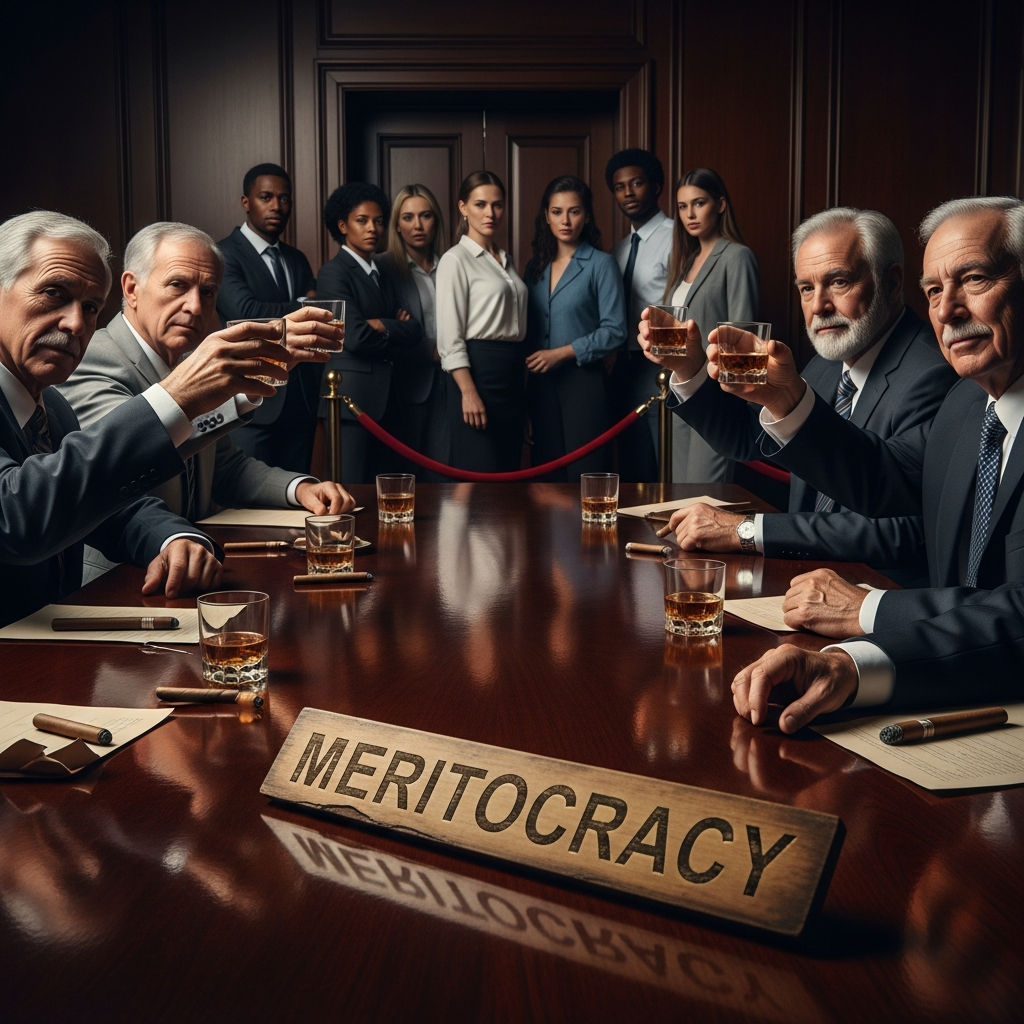
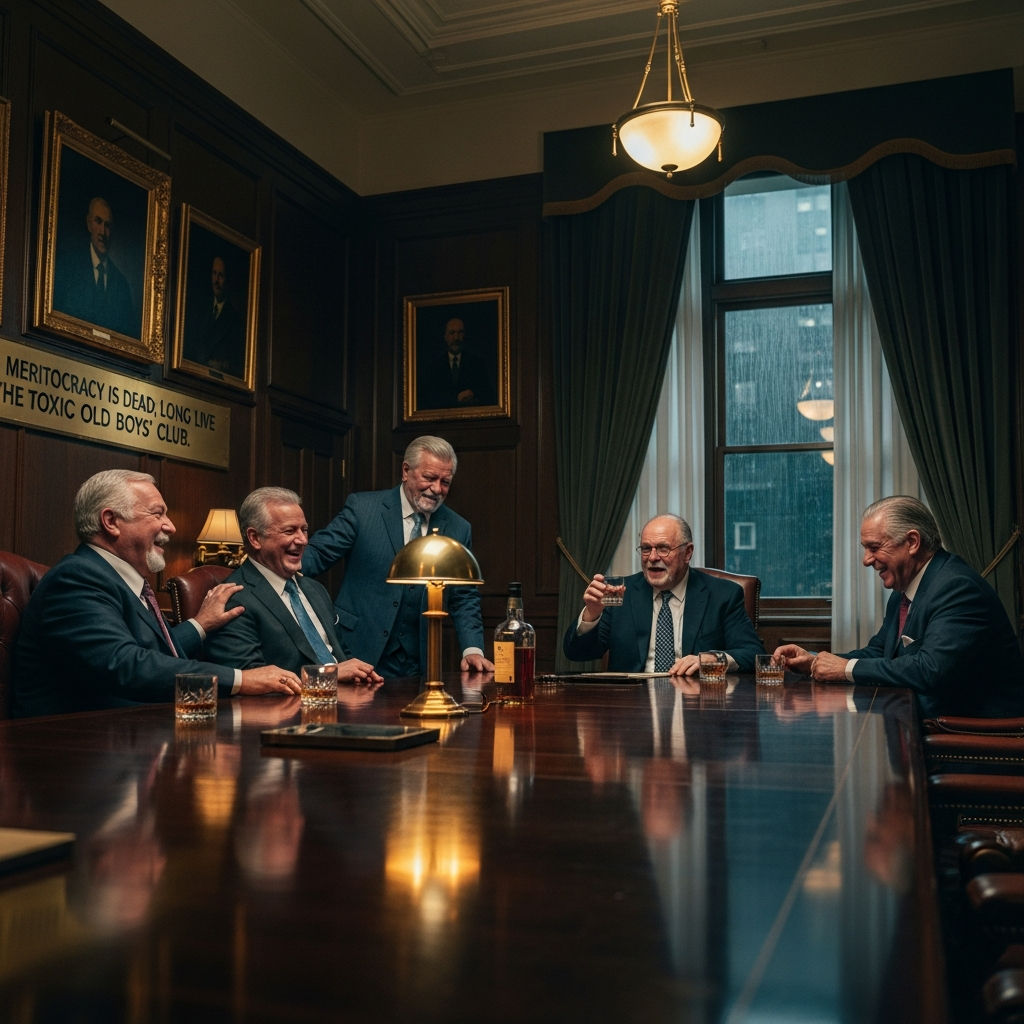
The reality is that meritocracy, as it was originally envisioned, is dead. In its place, a more insidious version of the “Old Boys’ Club” has re-emerged. While it may no longer be defined solely by wood-paneled boardrooms and secret handshakes, its mechanisms of exclusion, gatekeeping, and systemic bias are more potent than ever. To understand why our workplaces feel stagnant and unequal, we must first dismantle the myth of the level playing field.
The Satirical Origins of Meritocracy
It is a profound historical irony that the term “meritocracy” was coined as a warning, not an ideal. In his 1958 book, The Rise of the Meritocracy, British sociologist Michael Young used the word to describe a dystopian future. In his satire, a new social hierarchy emerged where those at the top believed their success was entirely earned, leading them to view those at the bottom with contempt.
Young argued that a meritocracy would be more heartless than an aristocracy. In an aristocracy, the poor know they are victims of birth; in a meritocracy, the unsuccessful are told they simply didn’t have the “merit.” Today, this satire has become our reality. We have weaponized the concept of merit to justify vast inequalities, all while ignoring the structural advantages that allow a specific demographic to claim “merit” in the first place.
The New Old Boys’ Club: Evolution of Exclusion
The traditional Old Boys’ Club was easy to identify: it was white, male, and wealthy. While modern diversity initiatives have changed the face of the workforce, the underlying “club” mentality has simply evolved. Today’s toxic exclusion often hides behind corporate buzzwords like “culture fit,” “networking,” and “pedigree.”
The new Old Boys’ Club operates through informal networks that are inaccessible to outsiders. It’s the referral for a job that never hits a public board; it’s the venture capital funding granted because of a shared alma mater; it’s the promotion handed to the person who shares the boss’s hobbies. It is a system built on comfort and familiarity rather than objective performance.
The “Culture Fit” Trap
Perhaps the most common tool used by the modern Old Boys’ Club is the “culture fit” interview. While ostensibly designed to ensure team harmony, it often serves as a proxy for unconscious bias. When a hiring manager looks for someone they “could grab a beer with,” they are subconsciously looking for a mirror of themselves. This excludes:
- Individuals from different socioeconomic backgrounds who may not share the same cultural touchstones.
- Caregivers who cannot participate in after-hours bonding rituals.
- Neurodivergent individuals who communicate differently.
- Women and minorities who do not fit the historical “image” of leadership in that industry.
How Meritocracy Weaponizes Success
When those at the top believe they arrived there solely through merit, they become blind to the “headwinds and tailwinds” of life. This creates a toxic environment where systemic barriers are dismissed as excuses. The myth of meritocracy allows leaders to ignore the fact that “hard work” looks very different for someone with a safety net versus someone without one.
Research consistently shows that social mobility is declining. In many industries, the single best predictor of professional success is not IQ or effort, but the zip code in which a person was born. By maintaining the facade of meritocracy, the Old Boys’ Club can continue to hoard opportunity while maintaining a moral high ground. They can claim the system is fair, even as they pull the ladder up behind them.
The Performance of Diversity vs. The Reality of Power
Many organizations have responded to the death of meritocracy with “Diversity, Equity, and Inclusion” (DEI) programs. However, without a fundamental shift in power structures, these initiatives often become “diversity theater.”
We see companies with diverse entry-level cohorts, but the “C-suite” remains a monolithic block of the same backgrounds. This is because the Old Boys’ Club excels at gatekeeping the final stages of career advancement. The “glass ceiling” isn’t just a barrier; it’s a filter that only lets through those who have assimilated into the existing toxic culture.
The Economic Cost of Toxicity
The death of meritocracy isn’t just a social justice issue; it is an economic failure. When a toxic Old Boys’ Club dictates who gets to lead and innovate, the best ideas are often left on the cutting room floor. This leads to several negative outcomes for businesses and society:
- Groupthink: Homogeneous leadership teams are prone to blind spots, failing to anticipate market shifts or ethical pitfalls.
- Stagnation: When promotions are based on loyalty and “fit” rather than innovation, companies lose their competitive edge.
- Employee Burnout: High-performers who realize the “game is rigged” will eventually leave, leading to a “brain drain” of talent that doesn’t belong to the inner circle.
- Widening Wealth Gap: As opportunities remain concentrated in small networks, the economic divide between the “club” and the public continues to grow.
Dismantling the Club: A Path Forward
If we accept that meritocracy is currently a myth, how do we build something better? Replacing a toxic Old Boys’ Club requires more than just better hiring software; it requires a radical commitment to transparency and structural change.
1. Radical Transparency in Pay and Promotion
Secrecy is the lifeblood of the Old Boys’ Club. When pay scales and promotion criteria are opaque, it is easy for favoritism to thrive. Organizations must move toward transparent salary bands and objective, data-driven promotion metrics. If you cannot explain why “Candidate A” was promoted over “Candidate B” using clear, pre-defined benchmarks, the system is failing.
2. Ending the Referral Monopoly
Employee referrals are often touted as a “gold standard” for hiring, but they are the primary way the Old Boys’ Club replicates itself. To break the cycle, companies must limit the weight of referrals and actively source talent from non-traditional pipelines, such as community colleges, state schools, and diverse professional organizations.
3. Redefining Leadership
We must move away from the “Great Man” theory of leadership—the idea that a leader must be a charismatic, aggressive visionary (usually modeled after historical male archetypes). True merit includes empathy, collaboration, and the ability to foster an inclusive environment. By broadening our definition of “merit,” we can begin to see the talent that has been standing in front of us all along.
Conclusion: Long Live the Search for True Equity
Meritocracy, in its current state, is a convenient lie used to protect the status quo. The “Toxic Old Boys’ Club” has simply put on a new suit, trading the country club for the tech campus or the high-frequency trading floor. It continues to reward those who look, act, and think like the existing power structure.
Acknowledging that meritocracy is dead is not an admission of defeat; it is the first step toward building a system that actually works. We must stop pretending the playing field is level and start doing the hard work of removing the hurdles. Only then can we move toward a future where “merit” is not a weapon of exclusion, but a genuine reflection of human potential.
“`